
Lake City Bridge Placement
Lake City Bridge is a contract community release center operated by Bridges of America under FDC authority. FDC's FY 2024-25 annual report lists “Lake City CRC (Bridges of Lake City),” and the current operator page identifies the Lake City Bridge location. This is a corrections placement, not a county jail and not a private post-discharge residence.
Community release can permit structured work, programming, and movement outside a secure prison while the person remains in FDC custody. That makes ordinary language risky. Someone may be “in the community” without being discharged. Completion of the placement may lead to another FDC status, post-prison supervision, or sentence expiration, but the public release record must establish which event occurred.
Confirm Bridge Final Discharge
Start with the FDC Offender Search menu. Population Information can show whether the person remains an FDC inmate at Lake City CRC or another site. Inmate Release Information covers released or scheduled people. Supervised Population covers qualifying control after prison custody. Each system answers a different stage of the transition.
Use this order for a named person:
- Search Population Information by DC number to see whether Lake City Bridge remains the active placement.
- Search Inmate Release Information by the same DC number, or by full name with the alias option if needed.
- Open the full detail and compare identity, facility, offense, and release fields.
- Check Supervised Population for supervision type, status, assigned office, and termination date.
- If the screens conflict or lag, contact FDC Admission and Release and request the underlying record.
FDC says release data is updated nightly. An operator statement about program completion should be checked against FDC's legal status. The Columbia County release records path provides the parallel county-jail and court channels for people who were not in state custody.
Bridge Placement Versus Release
The distinction between placement and discharge can be tested through the field shown in each FDC system. A facility description naming Lake City CRC points to an active or historical placement. A future Current Release Date is a projection. A release detail with a completed status and date addresses the end of prison custody. A supervision detail describes a later legal status and has its own termination date.
| Status clue | Meaning | Do not call it |
|---|---|---|
| Lake City CRC placement | FDC community-release custody | Unconditional discharge |
| Transfer to another FDC site | Custody movement | Return to the community |
| Completed FDC release detail | Prison custody ended as recorded | Automatic end of supervision |
| Supervised Population record | Post-prison state control | Continued prison confinement |
A person may lawfully travel to work from the center and return under program rules. Public visibility does not prove discharge. Conversely, a person may have left prison custody but remain subject to probation, community control, conditional release, or another state supervision type. The status labels and dates must carry the conclusion.
Bridge Release Search Fields
The DC number is the best key across FDC systems. Names and aliases can vary, while the same number links population, release, supervision, and incarceration history. The public release search also offers photo controls. Use the image as an identity aid, then confirm birth data, offenses, dates, and status before accepting the match.
An active detail's Current Release Date should not be mistaken for completed discharge. Florida Statute §944.275 calls the gain-time projection a tentative release date. Eligible gain time, forfeiture or restoration, sentence structure, detainers, court orders, and minimum terms can affect it. For many qualifying post-1995 offenses, the 85-percent floor also limits how far incentive gain time can move the date.
- Community release
- An FDC placement allowing approved community activity while custody continues.
- Final discharge
- The processed end of the relevant custody or supervision term.
- Release date
- The date shown in FDC release information for a released or scheduled event.
- Supervision termination date
- The expected or actual end of post-release control, not the prison exit date.
Note: Physical movement outside the center and legal discharge are separate events with different records.
Lake City Bridge Records
When public fields do not resolve the transition, request the FDC release or discharge record. Give the full name, date of birth, DC number, Lake City Bridge or Lake City CRC as the known placement, and an approximate date range. Ask for the release type and date, relevant incarceration and placement history, and the digitized inmate photograph if identity needs confirmation.
FDC Admission and Release
Florida Department of Corrections
501 South Calhoun Street
Tallahassee, FL 32399
Bureau: (850) 488-9167
Email: dc.release@fdc.myflorida.com
Public-record help: (850) 717-9774
Submit the request through the FDC Public Records Center. Florida records law supports access subject to statutory exemptions. Medical, victim, witness, and safety-sensitive parts may be redacted. A focused request for dates, status, and placement history helps preserve the useful nonexempt core.
Lake City Bridge Contact
Current sources place Lake City Bridge at 1099 NW Dot Glen, Lake City, Florida 32055. The research did not verify a current phone or intake status suitable for publication. Confirm both with FDC or the operator before relying on them. Program operations can change while the statewide status record remains the authority for custody and discharge.
Lake City Bridge Community Release Center
1099 NW Dot Glen
Lake City, FL 32055
Operator: Bridges of America under FDC contract
Verify current phone and intake status before use.
The current Lake City Bridge operator source shown below identifies the facility and address used to match the local placement.
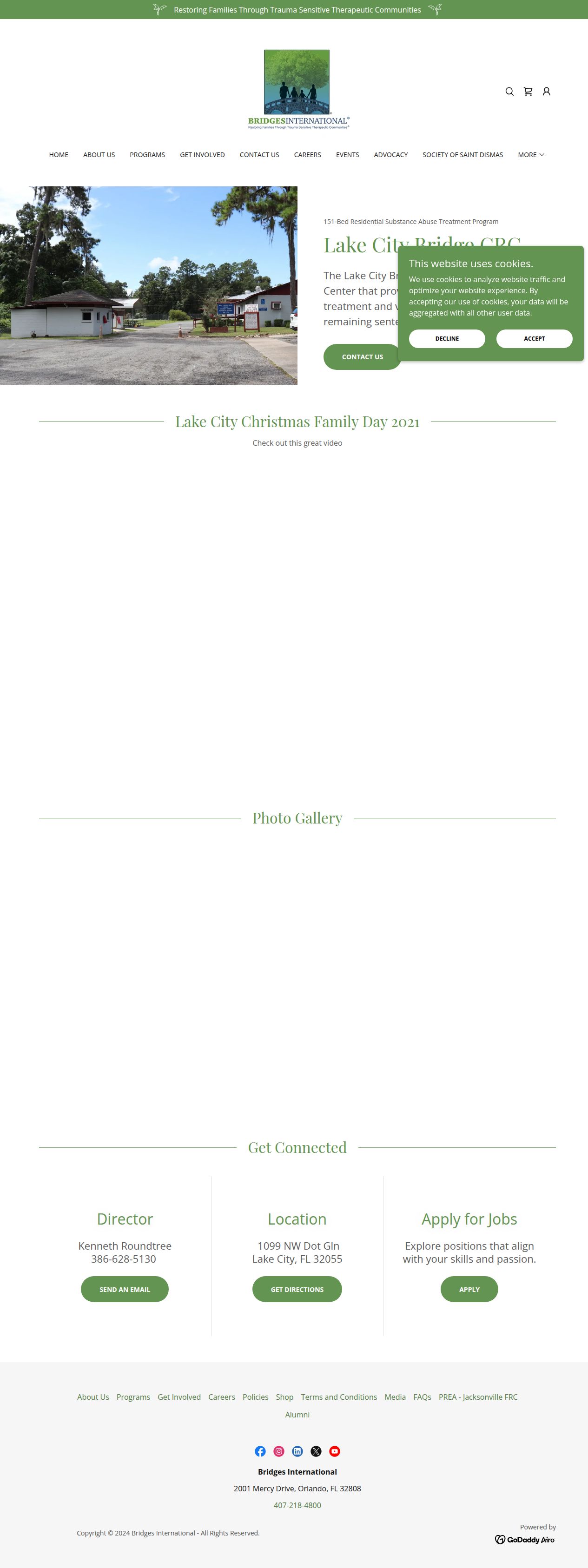
The image confirms the center's local identity, while FDC population and release records determine whether custody remains active or has ended.
Columbia County Release Differences
Lake City Bridge is the clearest local example of why physical place and legal status cannot be merged. Columbia County also contains a sheriff jail, the state-run Columbia prison complex, a work camp, and a privately operated FDC prison. A person can move from a secure prison into the CRC, later leave prison custody, and then appear on community supervision. Those are separate events.
The sheriff jail uses CCSO release documentation and the Columbia County Clerk docket. Columbia CI, its Annex, Columbia Work Camp, Lake City Correctional Facility, and Lake City Bridge use FDC population, release, and supervision records. CoreCivic and Bridges of America manage distinct contract sites, but FDC authority determines the state-prison release path. Choosing the facility first prevents an unhelpful county jail search.
For older state releases, FDC's monthly OBIS publication covers releases since October 1, 1997. It can include identity, aliases, release flags, facility descriptions, offenses, detainers, and incarceration history. Sealed, expunged, and confidential data is excluded. The nightly public searches remain the best first step for a recent Bridge placement or discharge.
The practical sequence is custody placement, completed prison release, then supervision. Skipping the first stage can turn work-release privileges into a false claim of discharge. Skipping the last stage can hide qualifying control that continues after physical custody. All three FDC records should be read in chronological order.
A historical facility line may preserve Lake City CRC after the person leaves. Label that line with its receipt and release dates rather than present it as current custody. The latest Population Information result controls active placement. The release detail controls the prison discharge event. A later Supervised Population result controls the description of post-prison status.
If a person returns from the CRC to a secure FDC institution, the timeline reflects another state transfer. It does not erase the earlier community-release placement, and it does not create a final discharge. The DC number links those movements across FDC systems.
Bridge Placement History
FDC's incarceration history may keep Lake City CRC as a past facility after the person moves or discharges. Read each receipt and release date beside the facility description. A later secure-prison entry can show that the person returned from community release to another FDC setting. A completed release flag addresses prison custody, while a supervision record addresses qualifying control that follows it.
For older events, FDC's OBIS released-person files cover releases from October 1, 1997 and normally refresh monthly. They can add aliases, offense records, detainers, and placement history. A detainer does not establish its own current status, so the final movement document may still be needed. The DC number connects these records and prevents a prior Lake City Bridge line from being mistaken for present placement or unconditional discharge.